
On this page
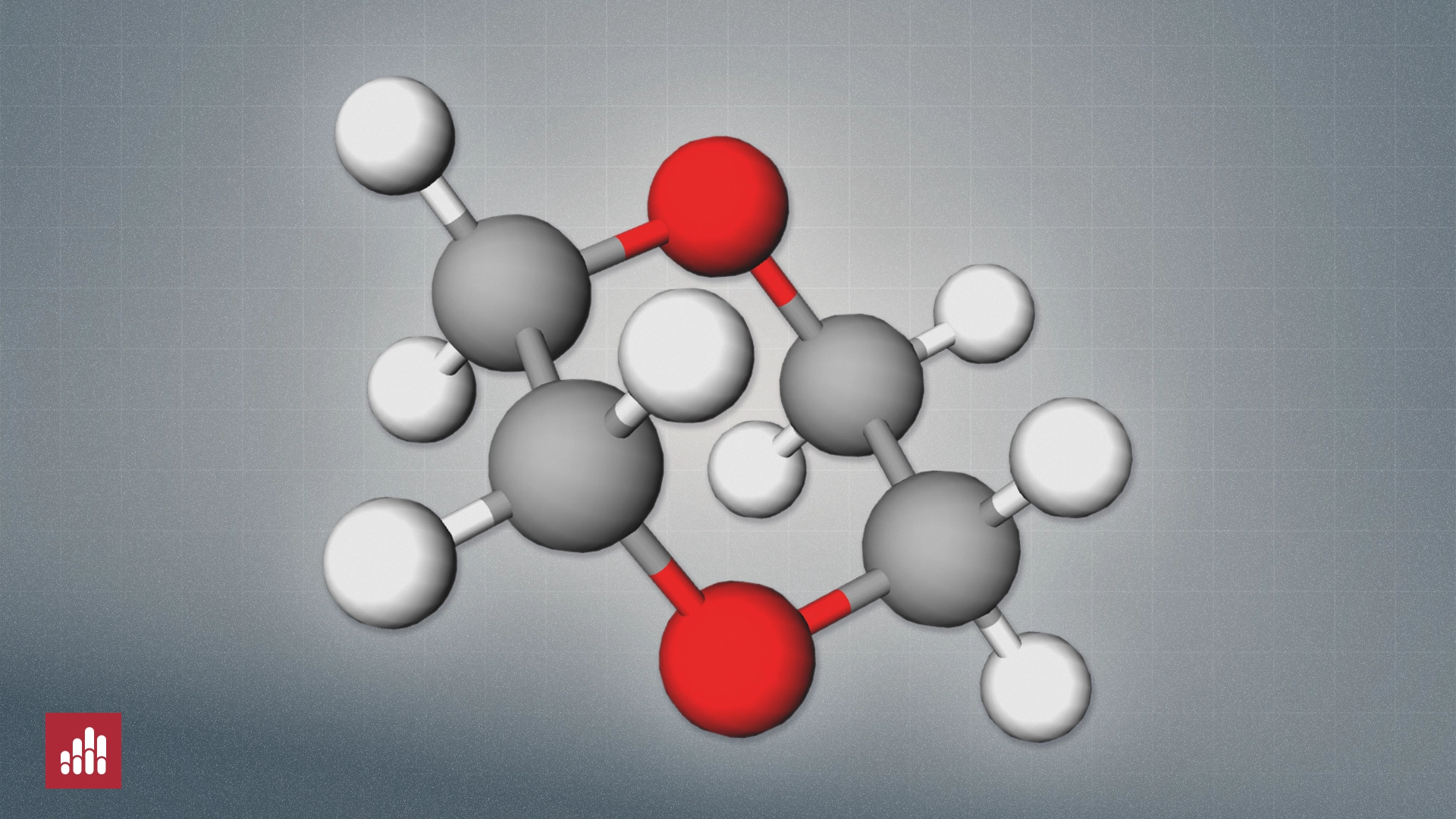
1,4-dioxane is one of the most challenging trace contaminants in groundwater and drinking water treatment. It is highly soluble, chemically stable, difficult to adsorb, and resistant to many conventional treatment processes. Unlike contaminants that can be removed effectively through activated carbon, air stripping, or standard filtration, 1,4-dioxane often requires a more aggressive treatment approach.
That is why advanced oxidation processes, often referred to as AOPs, have become central to 1,4-dioxane treatment strategy.
At Pinnacle Ozone Solutions, we view 1,4-dioxane treatment as a radical chemistry problem, not simply an ozone dosing problem. Successful treatment depends on whether the system can generate and deliver enough hydroxyl radical exposure under real water chemistry conditions.
Why 1,4-Dioxane Is Difficult to Remove
1,4-dioxane is a synthetic chemical historically used as a solvent stabilizer and industrial solvent. It is also found as an unintended byproduct in certain consumer and industrial products. Yale’s Superfund Research Center notes that 1,4-dioxane is highly water soluble, resists natural biodegradation, and can contaminate both groundwater and surface water sources.
From a treatment perspective, its physical and chemical properties create several problems:
- It does not volatilize easily compared with many solvents.
- It does not adsorb strongly onto activated carbon.
- It can pass through some membrane systems.
- It is resistant to natural biodegradation.
- It often appears with co-contaminants, including chlorinated solvents.
This means many conventional processes are either ineffective or insufficient on their own.
Yale specifically states that conventional treatment processes such as adsorption, filtration, and reverse osmosis are difficult pathways for 1,4-dioxane removal due to its small size, neutral charge, and weak adsorption behavior.
Why Conventional Treatment Falls Short
Many treatment plants are designed around physical separation or adsorption. Those approaches work well for contaminants that can be captured, filtered, stripped, or adsorbed. 1,4-dioxane behaves differently.
Activated Carbon
Granular activated carbon is effective for many organic contaminants, but 1,4-dioxane has weak affinity for carbon media. That means breakthrough can occur quickly, especially at low regulatory targets.
Air Stripping
Air stripping is effective for volatile organic compounds, but 1,4-dioxane has relatively low volatility. This limits removal efficiency.
Reverse Osmosis
Reverse osmosis can reduce many dissolved contaminants, but 1,4-dioxane may pass through membranes depending on operating conditions and membrane characteristics. RO also creates a concentrate stream that must be managed. For these reasons, the treatment goal is not simply to separate 1,4-dioxane from water. The goal is to destroy it.
Why Advanced Oxidation Is the Preferred Pathway
Advanced oxidation processes are designed to generate highly reactive oxidants, especially the hydroxyl radical.
The hydroxyl radical is one of the strongest oxidizing species used in water treatment. It reacts rapidly and non-selectively with many organic contaminants, including compounds that resist direct oxidation.
Yale describes AOP as a robust treatment approach that generates highly oxidative free radicals, especially hydroxyl radicals, to aggressively destroy 1,4-dioxane. Unlike removal-based methods, AOP can oxidize 1,4-dioxane into biodegradable intermediates and ultimately into water and carbon dioxide.
AOP can be created through several configurations, including:
- UV plus hydrogen peroxide
- ozone plus hydrogen peroxide
- ozone plus UV
- ozone combined with other catalytic or radical-promoting processes
The best approach depends on the water matrix, contaminant concentration, treatment target, and downstream process design.
Ozone’s Role in 1,4-Dioxane Treatment
Ozone alone is not always the most efficient oxidant for 1,4-dioxane because direct molecular ozone reacts selectively. 1,4-dioxane lacks many of the electron-rich functional groups that ozone attacks rapidly. However, ozone becomes highly valuable when used as part of an advanced oxidation system.
Ozone can decompose to form hydroxyl radicals through pathways influenced by pH, alkalinity, hydrogen peroxide addition, UV exposure, and background water chemistry. In an ozone-based AOP system, the objective is not merely to maintain an ozone residual. The objective is to maximize useful radical exposure. That distinction matters.
A treatment system designed only around ozone dose may underperform. A treatment system designed around radical generation, scavenger control, and contact efficiency can achieve much stronger contaminant destruction.
The Key Chemistry: Radical Exposure
For 1,4-dioxane, the most important treatment concept is not ozone concentration alone. It is hydroxyl radical exposure.
Radical exposure depends on:
- how many hydroxyl radicals are formed
- how quickly they react with 1,4-dioxane
- how many are consumed by competing substances
- how long the contaminant remains in the oxidation zone
This is why AOP design must account for more than chemical addition.
It must account for the full water matrix.
Water Quality Variables That Control Performance
TOC and Natural Organic Matter
Total organic carbon consumes hydroxyl radicals. High TOC can reduce the fraction of radicals available to attack 1,4-dioxane.
This means two waters with the same 1,4-dioxane concentration may require very different AOP designs.
Alkalinity
Carbonate and bicarbonate species can act as radical scavengers. In high-alkalinity waters, radical efficiency can drop significantly, increasing oxidant demand.
UV Transmittance
For UV-based AOP systems, UV transmittance directly impacts photon delivery. Low UVT reduces radical production efficiency and may require higher UV dose or pretreatment.
pH
pH affects ozone decomposition, radical formation, and scavenger behavior. Higher pH can promote ozone decomposition, but it can also increase scavenging depending on alkalinity.
Co-Contaminants
Chlorinated solvents, VOCs, iron, manganese, sulfides, and other reduced compounds compete for oxidants. These co-contaminants must be included in the ozone and AOP demand model.
Yale’s research program specifically highlights interest in AOP treatment of 1,4-dioxane and co-occurring contaminants in groundwater, emphasizing that co-contaminant chemistry matters in real-world treatment.
Why Dose Alone Is Not Enough
A common mistake in AOP design is assuming that adding more oxidant automatically improves treatment.
That is not always true.
Excess oxidant can:
- increase operating cost
- produce unnecessary residuals
- create downstream treatment burdens
- reduce process efficiency if radical generation is not optimized
The correct design question is not:
How much ozone or peroxide should be added?
The better question is:
How much useful hydroxyl radical exposure is created under this water’s actual chemistry?
That is the engineering foundation of effective 1,4-dioxane treatment.
Designing an Ozone-Based AOP System for 1,4-Dioxane
A technically sound design process should include the following steps.
Characterize the Water Matrix
Before system sizing, engineers should evaluate:
- 1,4-dioxane concentration
- TOC
- alkalinity
- pH
- UVT
- iron and manganese
- sulfide
- bromide
- co-contaminants
- flow variability
This determines whether ozone-only pretreatment, ozone plus peroxide, ozone plus UV, or another AOP configuration is appropriate.
Determine Treatment Target
Targets may be based on:
- state drinking water limits
- groundwater cleanup goals
- reuse requirements
- industrial discharge limits
Because 1,4-dioxane targets are often very low, treatment design must include a safety margin supported by monitoring and validation.
Select the AOP Configuration
Ozone-based AOP may be used where ozone also provides additional treatment value, such as:
- oxidation of co-contaminants
- color reduction
- taste and odor control
- biological filtration enhancement
- disinfection support
In some cases, UV plus peroxide may be preferred. In other cases, ozone plus peroxide or ozone plus UV may provide broader treatment benefit.
Optimize Radical Generation
The system must be tuned for:
- ozone dose
- hydrogen peroxide ratio if used
- UV dose if used
- contact time
- pH conditions
- radical scavenger load
Include Post-Treatment Polishing
AOP may convert 1,4-dioxane into smaller oxidation intermediates. Downstream polishing can help manage these compounds.
Common post-treatment options include:
- biological activated carbon
- granular activated carbon
- filtration
- residual peroxide quenching where needed
Why Ozone Still Matters in 1,4-Dioxane Treatment
Even when hydroxyl radicals are the primary destructive species, ozone can play an important role in the broader treatment train.
Ozone can:
- generate hydroxyl radicals in AOP mode
- improve UV transmittance by oxidizing color-forming compounds
- reduce co-contaminant load
- support biological filtration downstream
- provide additional disinfection value
- improve overall treatment resilience
This makes ozone especially useful in systems where 1,4-dioxane is not the only problem.
In real groundwater and reuse systems, it rarely is.
The Pinnacle Engineering Perspective
At Pinnacle Ozone Solutions, we do not approach 1,4-dioxane treatment as a simple chemical feed problem.
We evaluate:
- reaction kinetics
- radical scavenging
- water matrix effects
- mass transfer efficiency
- contact time
- downstream polishing requirements
- operational control strategy
For ozone-based systems, this means designing around the full oxidation environment, not just generator output.
The goal is not to produce the most ozone. The goal is to produce the most effective treatment outcome.
Conclusion
1,4-dioxane is difficult to treat because it is small, soluble, stable, and poorly removed by conventional treatment methods.
That is why advanced oxidation has become a leading treatment pathway.
But successful AOP design depends on more than selecting an oxidant. It requires a precise understanding of radical chemistry, water quality, scavenger demand, and system hydraulics.
Ozone-based AOP can be a powerful tool when engineered correctly, especially in systems where 1,4-dioxane occurs alongside other contaminants that also benefit from oxidation.
At Pinnacle Ozone Solutions, we design advanced oxidation systems around real water chemistry, ensuring that each system is built not only to generate ozone, but to deliver measurable contaminant destruction where it matters most.
