
On this page
Water treatment infrastructure is built for longevity. Many treatment plants operate for 30 to 50 years, and major structural assets such as basins, piping networks, and buildings are expected to serve multiple generations of operators.
However, while the infrastructure surrounding a treatment process can last decades, the technologies that power treatment systems continue to evolve. Power electronics improve, control systems advance, and manufacturing technologies change over time.
For utilities operating ozone systems installed 15 or 20 years ago, the challenge is not that ozone technology has become outdated. The chemistry of ozone oxidation remains as effective today as it was decades ago.
The challenge is ensuring that the equipment used to generate ozone can evolve with technological advancements without forcing full system replacement.
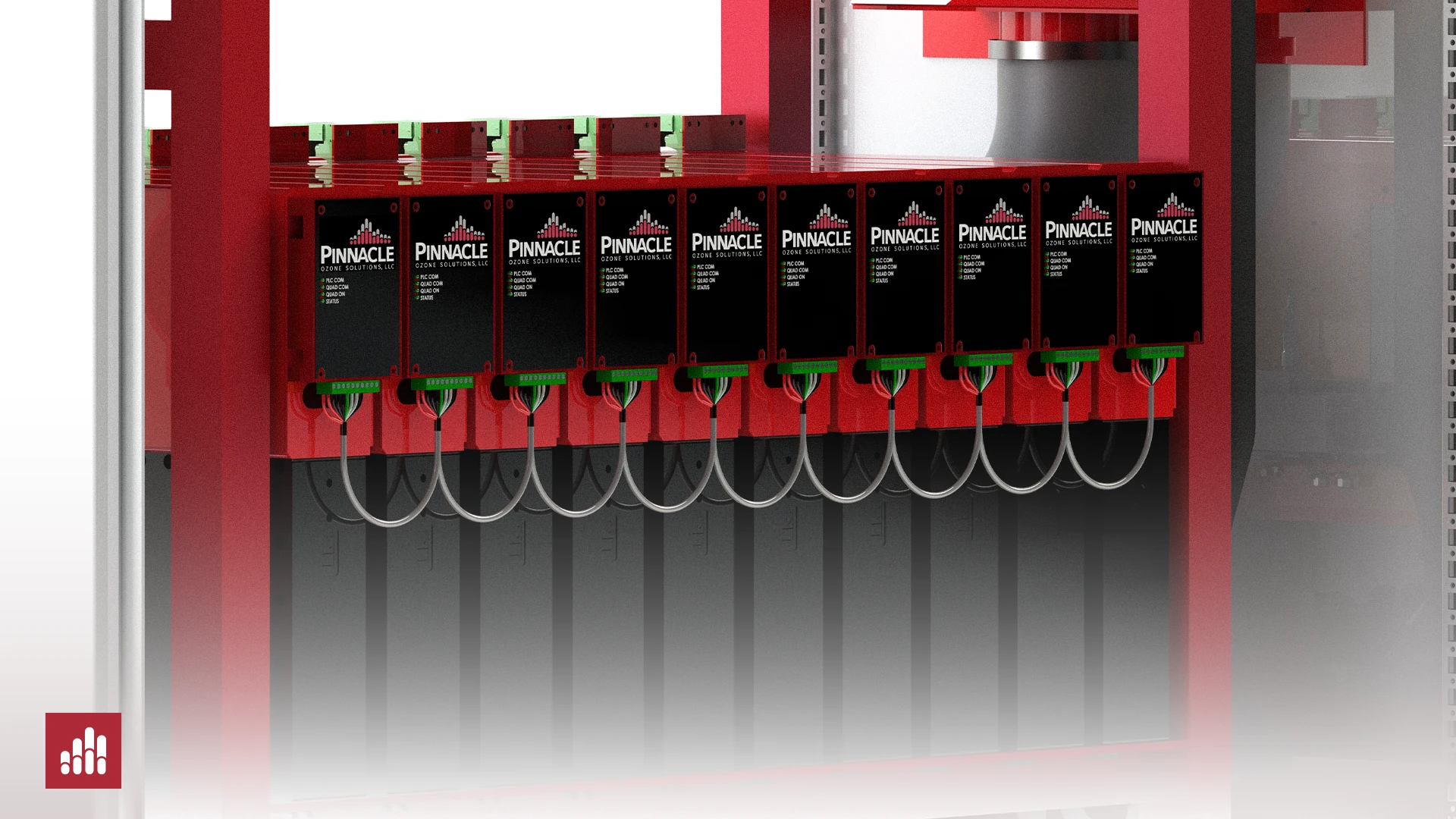
At Pinnacle Ozone Solutions, this challenge is addressed through a modular architecture centered on the QuadBlock ozone generation platform. The philosophy is simple:
An ozone generator should never become obsolete simply because technology improves.
The Natural Lifecycle of Treatment Technology
Every engineered system follows a lifecycle. In the water sector, this lifecycle often spans decades and typically includes:
- Installation and commissioning
- Long-term operation and optimization
- Component evolution as technology advances
- Strategic modernization
Over time, several factors influence aging ozone generator systems.
Component Evolution
Electronics used in earlier power supply architectures eventually reach end-of-life as semiconductor technologies advance. Newer components provide improved efficiency and reliability.
Supply Chain Changes
Some parts used in legacy systems may no longer be manufactured, making maintenance more complex as equipment ages.
Efficiency Improvements
Advancements in high-frequency power systems, corona discharge stability, and cooling design allow modern generators to produce more ozone per unit of energy.
Integration With Modern Controls
Today’s water treatment plants rely heavily on SCADA systems, advanced diagnostics, and predictive monitoring tools that older platforms may not support.
These changes do not mean older ozone systems are ineffective. Instead, they reflect the continuous evolution of engineering technology.
Modernization Instead of Replacement
Historically, many treatment technologies required full system replacement when major components became outdated. This often meant removing entire generator cabinets, redesigning electrical connections, and modifying plant layouts.
Pinnacle approached this problem differently.
Rather than treating the ozone generator as a single fixed unit, the QuadBlock architecture separates the structural generator system from the ozone generation core itself.
This modular approach allows modernization to focus on the component that actually produces ozone.
The QuadBlock Architecture
The QuadBlock is the core ozone generation module responsible for producing ozone through corona discharge. It contains the active ozone cells, internal power interfaces, and critical components responsible for ozone production.
Importantly, the QuadBlock is installed inside a generator cabinet or frame that remains part of the plant infrastructure.
This means the external structure of the ozone generator does not need to change when the ozone generation technology evolves.
Instead, the QuadBlock module inside the cabinet can be replaced with a newer generation unit.
Modernization Without Replacing the Generator Cabinet
One of the most significant advantages of the QuadBlock architecture is that the ozone generator cabinet itself does not change during modernization.
The cabinet, frame, and external system infrastructure remain installed exactly as they were originally configured.
When an upgrade occurs, operators replace only the QuadBlock ozone generation module inside the cabinet.
This means facilities can retain:
- the original generator cabinet and frame
- electrical connections and plant wiring
- oxygen supply piping
- cooling connections
- mechanical integration with the treatment plant
Because the surrounding infrastructure remains unchanged, modernization becomes far simpler than traditional equipment replacement.
In essence, the plant keeps the generator system while upgrading the ozone generation engine inside it.
Generational Improvements Within the Same System
Since the introduction of the QuadBlock platform, Pinnacle has continued advancing the technology through multiple generations of development.
Many facilities that installed early systems are now transitioning from Gen1 or Gen2 QuadBlock units to the current Gen4 architecture.
These upgrades introduce significant improvements, including:
Higher Energy Efficiency
Advances in power electronics allow greater ozone production per kilowatt consumed.
Improved Reliability
Modern components offer improved durability and longer service intervals.
Enhanced Monitoring and Diagnostics
Integrated controls provide more detailed operational insight and compatibility with modern plant SCADA systems.
Greater Operational Flexibility
Newer generation modules support evolving treatment objectives and advanced oxidation applications.
Yet despite these technological advancements, the generator cabinet and plant infrastructure remain unchanged.
Designing Systems That Avoid Obsolescence
Water treatment facilities must operate reliably for decades. Systems that require complete replacement whenever technology advances create unnecessary cost and disruption.
By separating the ozone generation module from the surrounding system structure, the QuadBlock architecture allows the technology to evolve while the installation remains intact.
This modular approach allows utilities to:
- extend equipment lifecycles
- improve energy efficiency
- maintain reliable treatment performance
- modernize systems without major plant modifications
Instead of becoming obsolete, the ozone generator system simply receives a new generation of technology inside the existing framework.
Engineering for the Long Term
At Pinnacle Ozone Solutions, system design begins with the understanding that water treatment infrastructure must endure for decades.
The QuadBlock architecture reflects this philosophy by allowing ozone generation technology to evolve across generations without requiring facilities to replace the systems they already rely on.
By upgrading the core ozone generation module while maintaining the original cabinet and infrastructure, utilities gain access to modern performance while preserving their existing investment.
In an industry where reliability and longevity matter most, designing ozone systems that never become obsolete is not just an advantage, it is the foundation of sustainable engineering.
