
Pinnacle Ozone Solutions has released Episode 13 of Pinnacle Academy, its educational video series on ozone technology for water treatment. In this episode, Chief Science Officer Thoram Charanda presents a real-world case study on one of the toughest challenges in groundwater treatment: using ozone to remove hydrogen sulfide while keeping bromate below the regulatory limit.
The case centers on a 4.6 MGD municipal groundwater facility that uses ozonation followed by biologically active carbon (BAC) filtration. The source water contained hydrogen sulfide at 1 to 2 mg/L and bromide concentrations up to 235 µg/L, a combination that makes bromate formation a constant concern.
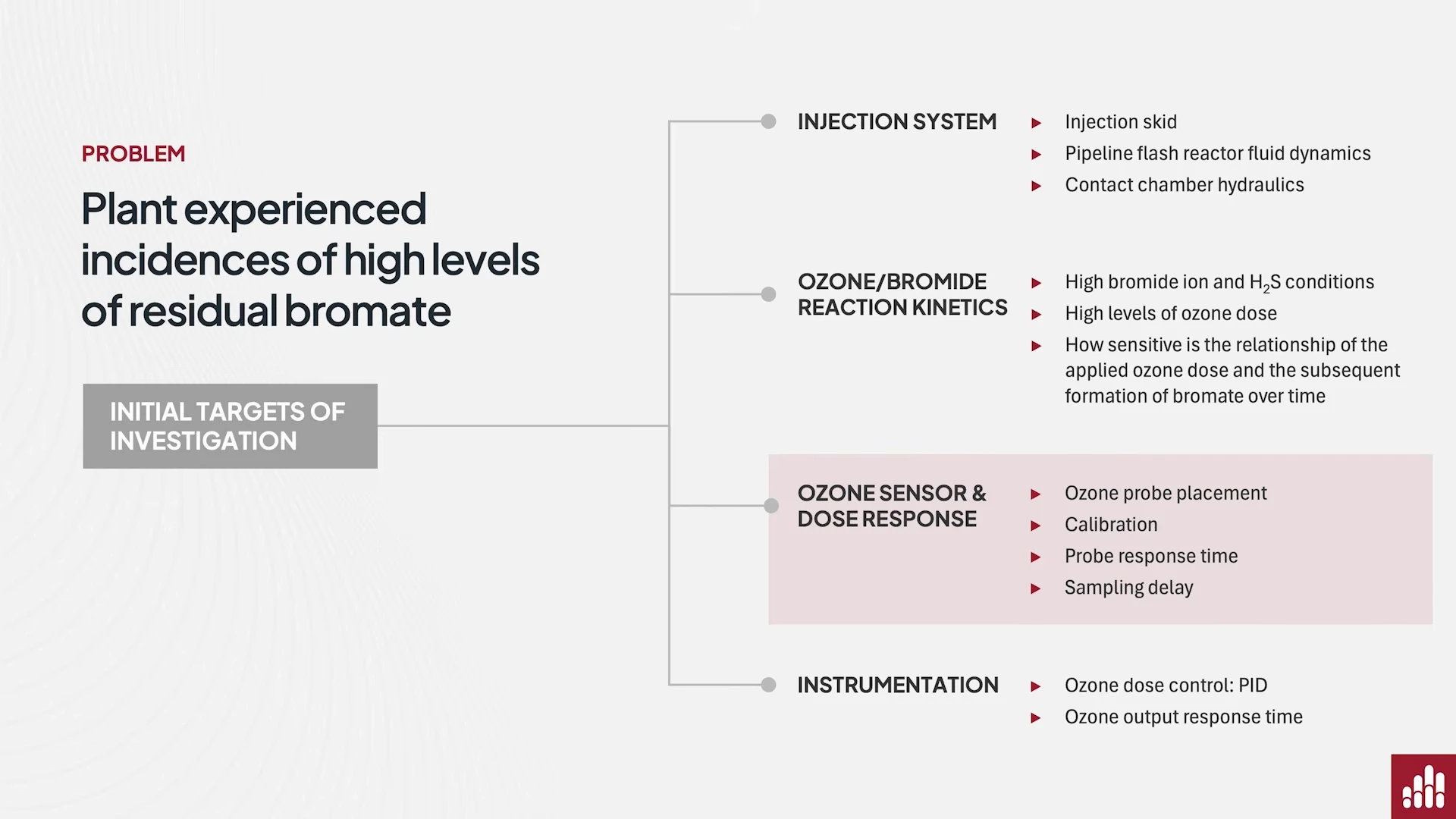
Bench studies indicated bromate could be held under the 10 µg/L maximum contaminant level (MCL). Once the plant was operating at full scale, however, it experienced recurring bromate events of 10 to 19 µg/L. Thoram walks viewers through the source water chemistry, benchtop ozone demand results, and bromate formation kinetics across different ozone doses, then explains how the team traced the gap between lab results and plant performance.
The answer went beyond chemistry. Reduced plant flow had changed contact time and mixing energy, while probe placement and sensor response were delaying ozone dose control by up to three minutes. Relocating to an ORP insertion probe with sub-second response resolved the issue.
The takeaway for utilities and engineers is that bromate control is not just a chemistry problem. Validate the water chemistry, examine the hydraulics, and make sure the system is controlling the right signal.
Watch the full episode on the Pinnacle Ozone Solutions YouTube channel.
Stay tuned for more.
For more information, visit pinnacleozone.com.
Media Contact:
Hannah Smith
Media Marketing Manager, Pinnacle Ozone Solutions
Hannah.smith@pinnacleozone.com | (646) 251-7770
