
On this page
- What Is a Dielectric?
- Why the Dielectric Is Essential
- The Environment Inside an Ozone Generator
- Why Material Selection Matters
- Dielectric Strength and Ozone Production
- Thermal Cycling and Mechanical Integrity
- Why a 20-Year Dielectric Warranty Matters
- The Dielectric and Pinnacle’s QuadBlock Platform
- Built for Long-Term Infrastructure
- What Customers Should Ask About Any Ozone Generator Dielectric
- Conclusion
In ozone generation, performance depends on more than power supply, oxygen feed gas, cooling, or controls. At the center of every corona discharge ozone generator is one of the most critical components in the system: the dielectric. The dielectric is not always discussed outside engineering circles, but it plays a central role in ozone production, generator reliability, efficiency, and long-term equipment life.
At Pinnacle Ozone Solutions, we back our dielectric with a 20-year warranty because it is engineered for long-term durability in one of the most demanding environments inside an ozone generator. This blog explains what the dielectric is, how it works, why it matters, and why long-term dielectric reliability is essential for ozone system performance.
What Is a Dielectric?
A dielectric is an electrically insulating material placed between energized electrodes inside a corona discharge ozone generator. In simple terms, it allows an electric field to form without allowing direct electrical conduction between electrodes. That may sound like a small detail, but it is fundamental to ozone generation.
In a corona discharge ozone generator, high voltage is applied across a narrow gas gap. Oxygen passes through this gap. The electrical field energizes oxygen molecules, splitting some O₂ molecules into oxygen atoms. These oxygen atoms then combine with other O₂ molecules to form ozone:
O₂ + energy → 2O
O + O₂ → O₃
The dielectric helps stabilize this electrical discharge so ozone can be produced efficiently and safely.
Why the Dielectric Is Essential
Without a properly designed dielectric, corona discharge becomes unstable.
The dielectric performs several important functions:
Electrical Insulation
It prevents direct arcing between electrodes. Direct arcing can damage generator components and reduce ozone production stability.
Discharge Control
The dielectric helps distribute the electrical field evenly across the discharge surface. This creates a controlled corona rather than destructive electrical arcing.
Thermal Stability
Ozone generation creates heat. The dielectric must withstand repeated thermal cycling without cracking, degrading, or losing insulating performance.
Ozone Resistance
The dielectric is continuously exposed to ozone, oxygen, high voltage, and heat. It must resist oxidation and chemical attack over long operating periods.
Long-Term Generator Efficiency
A stable dielectric supports consistent corona discharge, which helps maintain ozone output and energy efficiency over time.
The Environment Inside an Ozone Generator
The dielectric operates in a harsh environment.
It is exposed to:
- high voltage electrical fields
- concentrated oxygen
- high ozone concentration
- heat from corona discharge
- repeated start-stop cycles
- cooling gradients
- vibration and system operation cycles
These conditions place significant stress on materials. If the dielectric is poorly selected or poorly manufactured, it can become a long-term reliability risk.
Possible failure modes include:
- cracking
- pinholing
- electrical tracking
- arcing
- thermal stress damage
- loss of insulating strength
- reduced ozone output
When a dielectric fails, it can lead to generator downtime, costly repairs, and reduced confidence in the system.
Why Material Selection Matters
Not all dielectric materials perform the same.
A high-quality ozone generator dielectric must provide:
- high dielectric strength
- excellent thermal stability
- chemical resistance to ozone
- dimensional stability
- low defect rate
- consistent manufacturing quality
The dielectric must also be matched to the generator’s electrical design, cooling method, electrode geometry, and operating voltage.
This is why dielectric design is not simply a materials decision. It is a full system engineering decision.
Dielectric Strength and Ozone Production
Dielectric strength refers to the ability of an insulating material to withstand high voltage without electrical breakdown.
In ozone generation, this matters because the generator must create a strong electric field without allowing uncontrolled arcing.
A stable dielectric allows the ozone cell to maintain controlled corona discharge across the gas gap.
If dielectric strength declines, the generator may experience:
- unstable discharge
- localized arcing
- reduced ozone production
- increased heat
- component damage
Long-term dielectric stability is directly tied to long-term ozone generator reliability.
Thermal Cycling and Mechanical Integrity
Ozone generators heat up during operation and cool down during shutdowns. Over years of service, the dielectric experiences thousands of thermal cycles.
Each cycle creates expansion and contraction stress.
A durable dielectric must resist:
- microcracking
- warping
- stress fractures
- changes in surface properties
The stronger the dielectric’s thermal and mechanical stability, the more consistent the ozone generator remains over its operating life.
Why a 20-Year Dielectric Warranty Matters
A 20-year dielectric warranty is not just a warranty statement. It reflects engineering confidence in one of the most important components inside the ozone generator.
For customers, it means the dielectric is designed to support long-term operation and reduce lifecycle risk.
It Reduces Long-Term Uncertainty
The dielectric is not a minor consumable component. It is central to ozone cell performance. A long warranty gives customers confidence that the core ozone generation structure is built for long service life.
It Supports Lower Lifecycle Cost
Long dielectric life reduces the likelihood of major ozone cell replacement costs over the life of the system.
It Improves Operational Confidence
Facilities using ozone for critical treatment processes need reliable uptime. A durable dielectric supports stable ozone output and system availability.
It Reflects Engineering Quality
A manufacturer does not offer a long-term dielectric warranty unless the material, design, and manufacturing process are built to support it.
The Dielectric and Pinnacle’s QuadBlock Platform
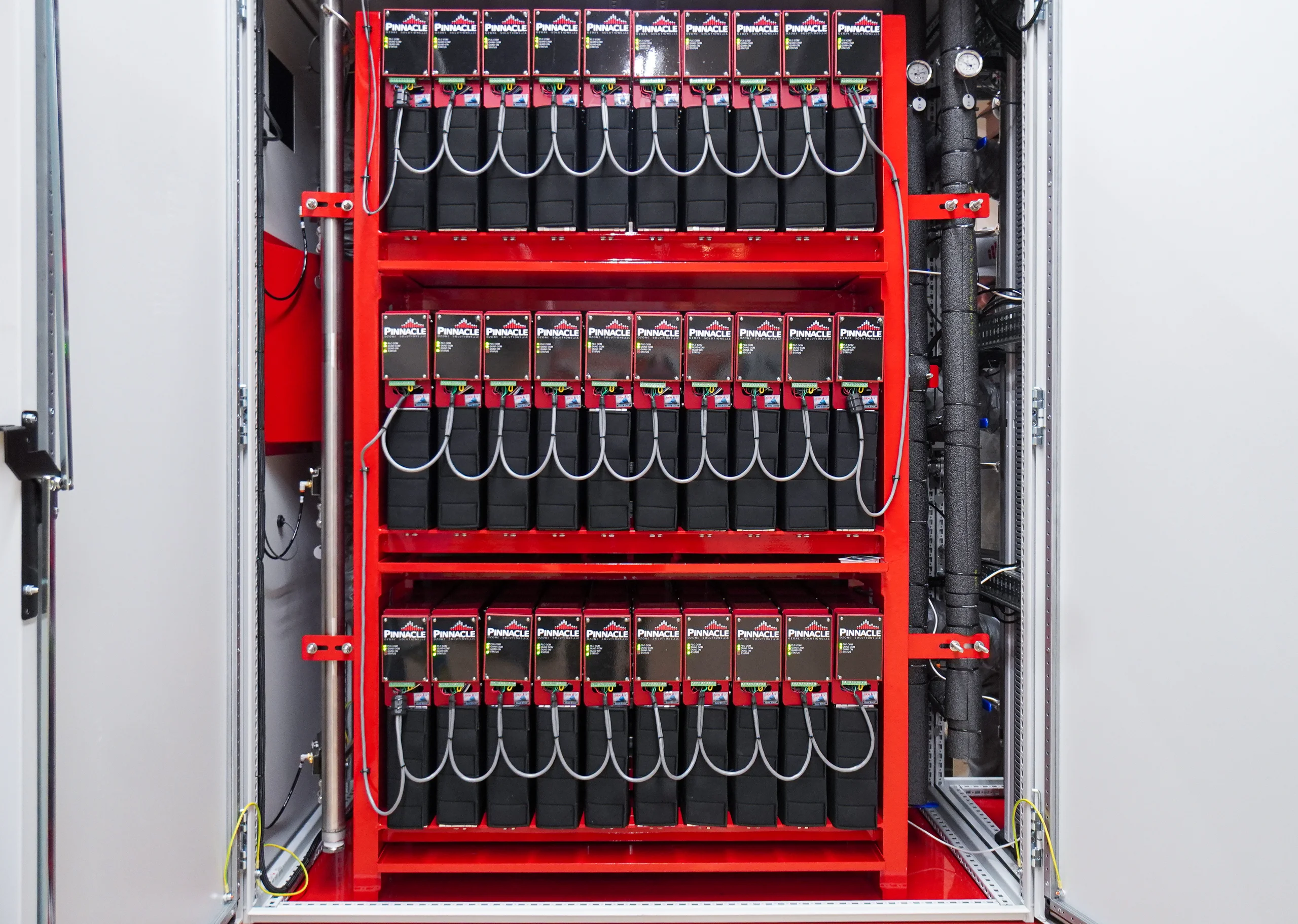
In Pinnacle’s ozone generator architecture, the dielectric is part of the core ozone generation technology inside the QuadBlock.
The QuadBlock is the ozone generation module inside the generator system. It is where oxygen is converted into ozone through controlled corona discharge.
Because the dielectric is central to the QuadBlock’s performance, its reliability directly affects:
- ozone output stability
- electrical efficiency
- equipment longevity
- maintenance planning
- overall system confidence
Pinnacle’s 20-year dielectric warranty reflects the long-term design philosophy behind the QuadBlock platform.
Built for Long-Term Infrastructure
Water treatment systems are long-term investments. Customers do not want equipment that performs well for a few years and then becomes a major maintenance liability.
They need systems designed for:
- continuous operation
- predictable maintenance
- stable performance
- upgradeable architecture
- long component life
The dielectric is one of the best examples of this philosophy.
By engineering the dielectric for long-term durability, Pinnacle helps customers protect the reliability of the ozone generation core.
What Customers Should Ask About Any Ozone Generator Dielectric
When evaluating ozone systems, customers should ask:
- What material is used for the dielectric?
- How is it protected from thermal stress?
- What operating conditions is it designed for?
- How is cooling managed around the dielectric?
- What warranty is provided?
- Is the dielectric treated as a long-life engineered component or a wear item?
These questions help reveal the long-term reliability of the ozone generator, not just its initial performance rating.
Conclusion
The dielectric is one of the most important components inside a corona discharge ozone generator. It controls the electrical discharge, protects against arcing, withstands heat and ozone exposure, and supports long-term generator efficiency. A strong dielectric design means more stable ozone production, fewer reliability concerns, and greater customer confidence over the life of the system.
At Pinnacle Ozone Solutions, the 20-year dielectric warranty reflects our commitment to engineering ozone systems for long-term performance, not short-term operation. Because in ozone generation, reliability starts at the core.
