
On this page
California’s recent release of $46 million in voter-approved funding to address pollution in the Tijuana River and New River underscores a reality that many communities already understand: wastewater infrastructure is now a frontline public health and environmental resilience issue.
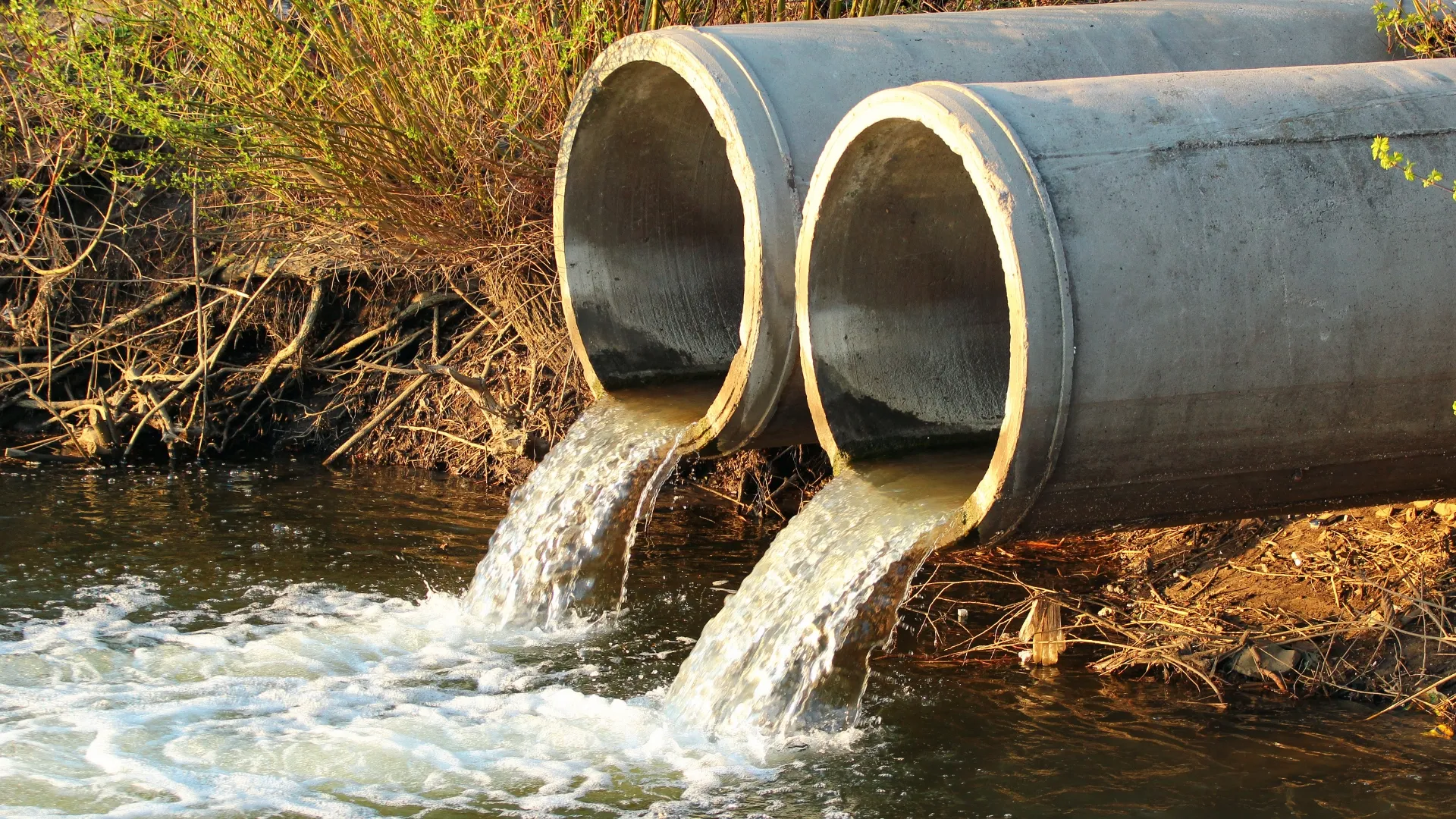
The Tijuana River crisis is one of the most visible examples in the United States. Since 2018, more than 100 billion gallons of toxic sewage have polluted the Tijuana River, affecting communities near the California-Mexico border and contributing to beach closures, odor complaints, public health concerns, and environmental degradation. The newly announced funding is intended to support pollution reduction, public health protection, and restoration work in impacted areas.
For engineers and treatment professionals, the lesson is clear: sewage-impacted waters require systems that can respond to highly variable, chemically complex conditions.
At Pinnacle Ozone Solutions, we view these challenges through an engineering lens. Wastewater resilience is not achieved through one technology alone. It requires a treatment strategy capable of addressing organic load, sulfides, pathogens, odor, industrial co-contaminants, and changing hydraulic conditions.
Ozone can play an important role in that strategy when properly integrated into a multi-barrier treatment train.
Why Sewage-Impacted Waters Are Difficult to Treat
Sewage-impacted waters are not chemically stable. Their composition can shift dramatically depending on flow, storm events, industrial discharges, infrastructure failures, temperature, and upstream treatment performance.
Typical constituents include:
- high biochemical oxygen demand
- high chemical oxygen demand
- ammonia and organic nitrogen
- hydrogen sulfide and reduced sulfur compounds
- pathogenic microorganisms
- suspended solids
- fats, oils, and grease
- dissolved organic carbon
- pharmaceuticals and personal care products
- industrial solvents or trace organics
This makes treatment design difficult because oxidation demand can change quickly.
A system designed only for average conditions may underperform during peak loading events. A resilient system must be capable of adapting to both baseline flow and shock-loading conditions.
Hydrogen Sulfide: Odor, Corrosion, and Public Health
One of the most important compounds in sewage-impacted systems is hydrogen sulfide, or H₂S.
Hydrogen sulfide forms under anaerobic conditions when sulfate-reducing bacteria metabolize sulfur compounds. It is responsible for the characteristic rotten-egg odor associated with sewage and wastewater collection systems.
H₂S also creates major infrastructure problems:
- odor complaints
- corrosion of concrete and metal
- worker safety hazards
- chemical demand in downstream treatment
- formation of sulfuric acid in collection systems
In the Tijuana River crisis, reporting has specifically noted harmful hydrogen sulfide gas as one of the public health concerns associated with the pollution.
Ozone reacts rapidly with hydrogen sulfide:
H₂S + O₃ → S⁰ + O₂ + H₂O
With additional ozone exposure, sulfide can be further oxidized toward sulfate:
H₂S + 4O₃ → SO₄²⁻ + 4O₂ + 2H⁺
The treatment goal determines the oxidation endpoint. Partial oxidation to elemental sulfur may require filtration or solids handling. Complete oxidation to sulfate may require higher ozone dose and more contact time.
Ozone for Odor Control
Odor in wastewater is rarely caused by one compound. Common odor-producing constituents include:
- hydrogen sulfide
- mercaptans
- amines
- volatile fatty acids
- reduced sulfur compounds
- organic decomposition products
Ozone can oxidize many of these compounds directly or indirectly, reducing odor intensity and improving air quality around treatment areas.
For wastewater resilience applications, ozone may be applied to:
- sidestream flows
- lift station wet wells
- headworks areas
- equalization basins
- tertiary effluent polishing
- odor control scrubber systems
Successful odor control requires proper gas-liquid contact, adequate residence time, and careful off-gas management.
Pathogen Reduction in Variable Wastewater
Sewage-impacted waters contain bacteria, viruses, and protozoa. Traditional disinfection systems can be effective, but performance depends heavily on water quality.
High suspended solids and organic load can shield pathogens and consume disinfectants.
Ozone provides strong disinfection because it oxidizes microbial cell walls, membranes, and intracellular components. It is effective against a broad range of microorganisms and does not rely on maintaining a persistent chemical residual.
However, wastewater disinfection with ozone must be engineered around:
- ozone demand
- suspended solids
- turbidity
- contact time
- hydraulic short-circuiting
- temperature
- downstream discharge requirements
For highly variable sewage-impacted water, ozone is most effective when paired with upstream solids removal and downstream monitoring.
Organic Load and COD Reduction
Wastewater and polluted river flows often contain a broad mixture of dissolved and particulate organics.
Ozone can oxidize organic compounds by:
- direct molecular ozone reactions
- hydroxyl radical reactions under advanced oxidation conditions
These reactions can reduce color, odor, and certain trace organics. Ozone may also transform high-molecular-weight organic compounds into smaller, more biodegradable intermediates.
This can improve downstream biological treatment by increasing biodegradability.
In practical terms, ozone may support:
- COD reduction
- color reduction
- improved filterability
- enhanced biological polishing
- reduction of recalcitrant organics
Ozone should not be viewed as a universal replacement for biological treatment. Instead, it can act as a powerful oxidation step that improves the performance of the overall treatment train.
The Role of Ozone in Multi-Barrier Wastewater Resilience
For complex sewage-impacted waters, the strongest treatment strategy is typically multi-barrier design.
A resilient treatment train may include:
- screening and grit removal
- primary solids removal
- biological treatment
- ozone oxidation
- filtration or biological activated carbon
- disinfection polishing
- monitoring and discharge control
Ozone can be positioned at different points depending on the objective.
Upstream Ozone
Used for odor control, sulfide oxidation, or industrial contaminant pre-treatment.
Midstream Ozone
Used to improve biodegradability, reduce color, and support downstream biological processes.
Downstream Ozone
Used for effluent polishing, disinfection, trace organic reduction, and reuse preparation.
Correct placement depends on water chemistry, treatment goals, and economics.
Engineering Challenges in Sewage-Impacted Applications
Ozone can be highly effective, but sewage-impacted waters present unique design challenges.
High Ozone Demand
Organic matter, sulfides, nitrite, and reduced metals can consume ozone rapidly. Dose must be based on measured demand, not fixed assumptions.
Variable Flow
Storm events can increase flow and dilute or redistribute contaminants. Control systems must respond dynamically.
Suspended Solids
Solids can shield pathogens and consume ozone. Pretreatment is often essential.
pH and Alkalinity
pH affects ozone decomposition, sulfide speciation, and radical pathways.
Bromide and Coastal Waters
Coastal and brackish waters may contain bromide. Ozone systems must be designed to manage bromate formation risk where relevant.
Off-Gas Management
Ozone off-gas must be captured and destroyed safely, especially in enclosed treatment spaces.
Why Monitoring Is Essential
Wastewater resilience depends on visibility.
Ozone systems treating variable wastewater should include monitoring of:
- flow
- ORP
- dissolved ozone where applicable
- gas-phase ozone
- ozone off-gas
- pH
- temperature
- turbidity
- COD or TOC where available
- sulfide
- ammonia or nitrite
Automation allows the ozone system to adjust to real process conditions instead of operating on fixed output alone.
This is critical in systems where influent quality can change quickly.
Lessons From the Tijuana River Crisis
The Tijuana River situation is not simply a local environmental story. It is a warning about what happens when wastewater infrastructure falls behind population growth, industrial activity, and climate variability.
The United States and Mexico signed a new agreement in 2025 to address the longstanding sewage crisis through infrastructure projects, monitoring, research, and future planning for critical sewage systems in Tijuana. The recent California funding is another step toward addressing impacts on affected communities, but the broader engineering lesson remains clear: wastewater resilience requires both capital investment and advanced treatment planning.
Treatment systems must be designed for:
- fluctuating flows
- high organic loading
- odor and sulfide control
- pathogen risk reduction
- industrial co-contaminants
- long-term operational reliability
Ozone can contribute meaningfully when integrated with the right upstream and downstream processes.
The Pinnacle Engineering Perspective
At Pinnacle Ozone Solutions, we do not view ozone as a standalone answer to every wastewater challenge.
We view ozone as a high-value oxidation tool within a properly engineered system.
For sewage-impacted waters, our design approach considers:
- ozone demand and decay
- sulfide oxidation chemistry
- COD and TOC loading
- mass transfer efficiency
- contact time
- off-gas safety
- controls and automation
- downstream filtration or biological polishing
The goal is not simply to add ozone. The goal is to create a controlled oxidation environment that improves overall treatment performance.
Conclusion
The Tijuana River pollution crisis highlights the urgent need for resilient wastewater infrastructure capable of handling complex and variable contamination. Sewage-impacted waters challenge conventional treatment because they combine high organic load, sulfides, pathogens, odor compounds, and shifting hydraulic conditions. Ozone can play a critical role in addressing these challenges by oxidizing sulfides, reducing odors, supporting pathogen control, improving organic breakdown, and strengthening multi-barrier treatment systems. But performance depends on engineering.
At Pinnacle Ozone Solutions, we design ozone systems around real water chemistry, real hydraulics, and real operating conditions. In wastewater resilience, that level of engineering is essential. Because protecting communities and waterways requires treatment systems built not just for normal operation, but for the moments when infrastructure is under stress.
