
On this page
A recent development in U.S. water regulation has significant implications for how utilities and engineers design treatment systems. The U.S. Environmental Protection Agency (EPA) has proposed a National Primary Drinking Water Regulation (NPDWR) for perchlorate, setting a Maximum Contaminant Level Goal (MCLG) and co-proposing enforceable Maximum Contaminant Levels (MCLs) of 20 µg/L, 40 µg/L, or 80 µg/L for perchlorate in drinking water.
Perchlorate, used in rocket propellants, fireworks, flares, and found naturally in arid regions, has been under regulatory review for more than a decade due to potential health concerns, especially for sensitive populations. The public comment period on the proposed rule is open through March 9, 2026, with hearings scheduled.
This proposed regulation marks a turning point: if finalized, it will require water systems to control perchlorate concentrations, adding complexity to treatment design. For water treatment engineers and technology providers like Pinnacle Ozone Solutions, this raises key questions: How should treatment trains change? What oxidation options can handle perchlorate? And how does implementation affect broader water quality goals?
Understanding Perchlorate and Its Treatment Challenges
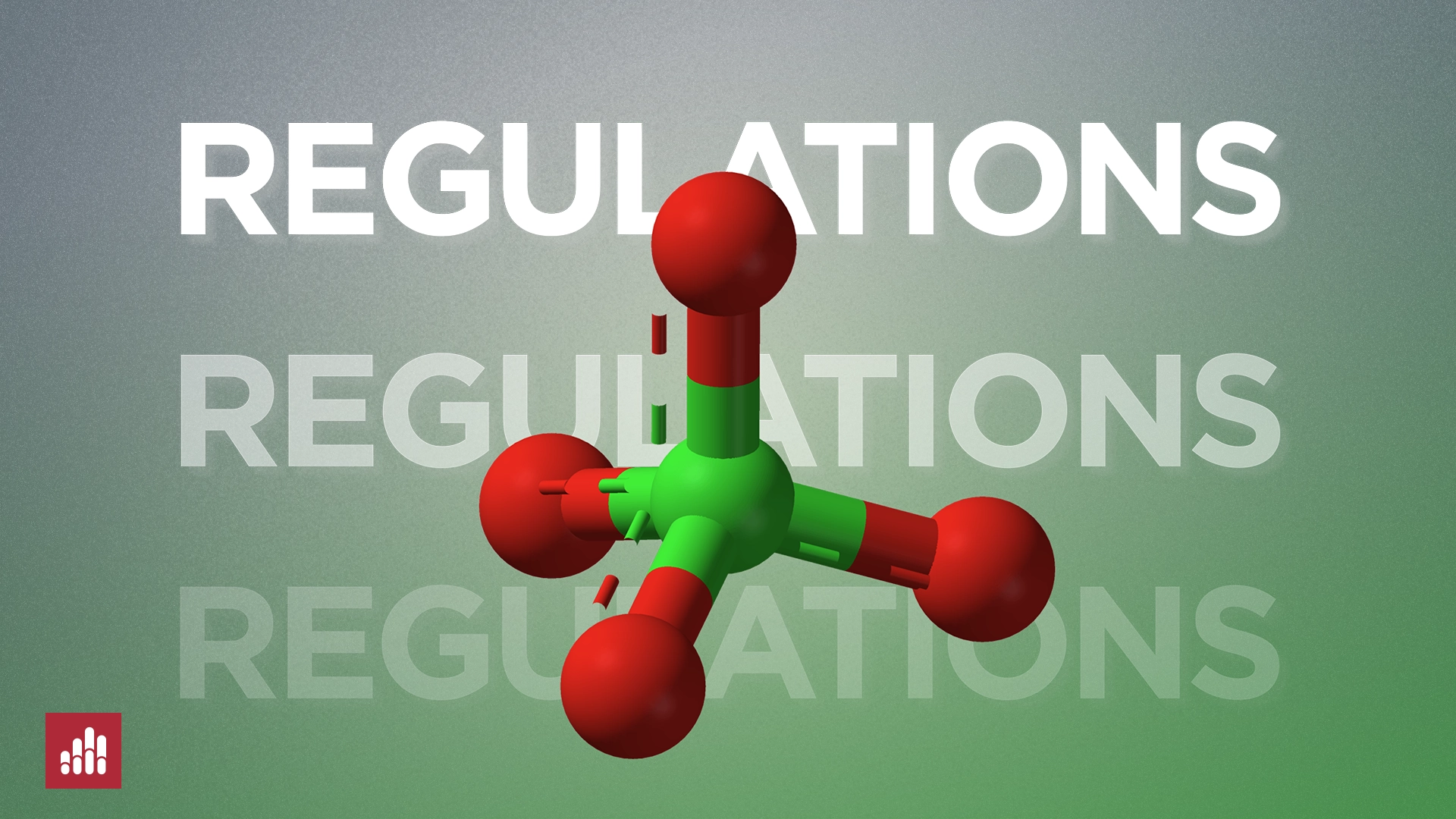
Perchlorate (ClO₄⁻) is a highly soluble ion that resists conventional drinking water treatment methods such as coagulation/flocculation, sedimentation, and standard filtration. Its mobility in groundwater and surface water makes it a persistent concern in affected regions.
Why Perchlorate Is Hard to Treat
- High solubility: Perchlorate does not readily adsorb onto activated carbon or traditional media.
- Low reactivity: It does not break down easily via biodegradation in typical biological filters.
- No easy removal mechanism: Physical separation technologies like reverse osmosis (RO) can remove perchlorate, but at high energy and operational cost.
Because of these characteristics, utilities planning to meet a future perchlorate rule will need to incorporate oxidation or advanced separation processes capable of transforming or removing perchlorate efficiently and reliably.
Treatment Options Under Consideration
Advanced Oxidation Processes (AOPs)
AOPs, including combinations like ozone with hydrogen peroxide or ozone plus UV, generate hydroxyl radicals (·OH) in water. These radicals are among the most reactive oxidants available in aqueous systems, capable of attacking strong chemical bonds in persistent contaminants.
While perchlorate is highly oxidized and not easily destroyed by single oxidant steps, AOPs can facilitate indirect reduction pathways and enhance transformation of refractory species when combined with other physicochemical strategies. In practice, this means:
- Integration with reduction steps: AOPs can be paired with catalytic or electrochemical reduction zones where perchlorate is reduced to chloride under controlled conditions.
- Supportive pre‑ and post‑treatment: Ozone or AOP can address related organics and co‑contaminants, improving downstream separation or polishing performance.
In advanced treatment trains, particularly for potable reuse or drinking water compliance, AOP units are often placed after primary oxidation and before final polishing (e.g., BAC, RO, or ion exchange) to maximize removal efficiency across a broader contaminant suite.
Ion Exchange and Membrane Systems
Ion Exchange (IX)
Strong base anion exchange resins can selectively remove perchlorate from water. Their effectiveness depends on competing ions (e.g., sulfate, nitrate). Engineering designs must consider:
- Regeneration requirements: The frequency and chemistry needed to regenerate resins.
- Brine disposal: The logistics of handling spent regenerant solutions.
IX remains one of the most cost‑effective point‑of‑use options where perchlorate is the dominant contaminant and competing ions are manageable.
Reverse Osmosis (RO)
RO membranes provide a physical barrier to perchlorate due to size exclusion and charge repulsion. However:
- Energy intensity: The process consumes significant energy.
- Waste brine management: Concentrate must be managed responsibly.
RO is often deployed as part of a multi‑barrier approach in drinking water and reuse facilities where perchlorate removal is essential and broader desalination or hardness reduction is concurrently needed.
How This Shapes Future Treatment Trains
With the proposed perchlorate regulation underway, utilities should consider integrating technologies that address:
- Targeted perchlorate removal and transformation
- Broader contaminant mitigation (e.g., emerging contaminants, organics)
- Operational flexibility under variable source water conditions
A modern treatment train might include:
- Pre‑oxidation (Ozone / Ozone‑based AOP)
- Target organics, taste/odor, and precursor compounds
- Improve downstream separation performance
- Primary separation (RO / IX)
- Physically retain perchlorate and other dissolved ions
- Polishing (BAC / Advanced Filtration)
- Remove trace organics and by‑products from oxidation
- Instrumentation & Control
- Real‑time monitoring (ORP, turbidity, conductivity) to adapt to load variations
This layered approach ensures compliance not just with perchlorate limits but broader regulatory demands, including disinfection by‑product control and emerging contaminants.
Engineering Considerations for Ozone‑Enabled Trains
When deploying ozone or ozone‑based AOP before membrane or ion exchange systems, engineers should focus on:
- Mass Transfer Efficiency: High ozone transfer efficiency (e.g., > 95 %) reduces waste and ensures consistent oxidation performance, vital when upstream processes feed sensitive separations.
- Reaction Kinetics and Scavenger Chemistry: Understanding how water quality variables (pH, alkalinity, dissolved organics) influence radical generation and oxidant demand is crucial for reliably sizing AOP modules.
- By‑Product Control: Oxidation can produce biodegradable intermediates that may load downstream biological filters; engineers must balance dose to minimize unintended impacts while ensuring performance.
Perchlorate Regulation Is a Catalyst for Smarter Treatment
The EPA’s proposed perchlorate rule highlights a broader trend in U.S. water regulation: stringent limits on persistent contaminants are increasingly likely. Utilities and engineers who anticipate these requirements can design treatment systems that not only meet perchlorate standards but also add flexibility to handle other emerging contaminants and future regulatory changes.
Advanced oxidation strategies, particularly when integrated thoughtfully with separation technologies, offer a path forward, enabling systems that are both robust and adaptable for evolving water quality challenges.
Sources
- EPA Proposed Perchlorate National Primary Drinking Water Regulation, NPDWR and MCLG (2025)
- EPA Federal Water Tap: Permitting changes and EPA delays on perchlorate rulemaking (Dec 15, 2025)
